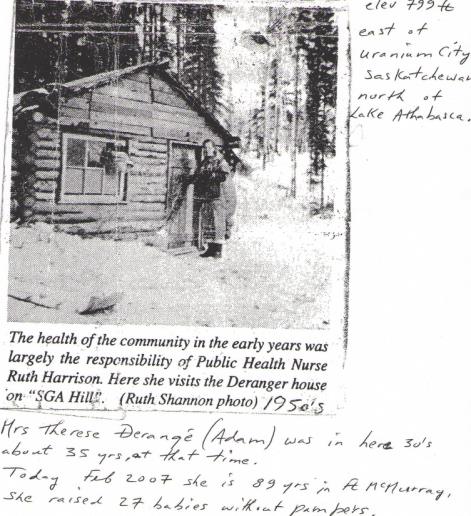
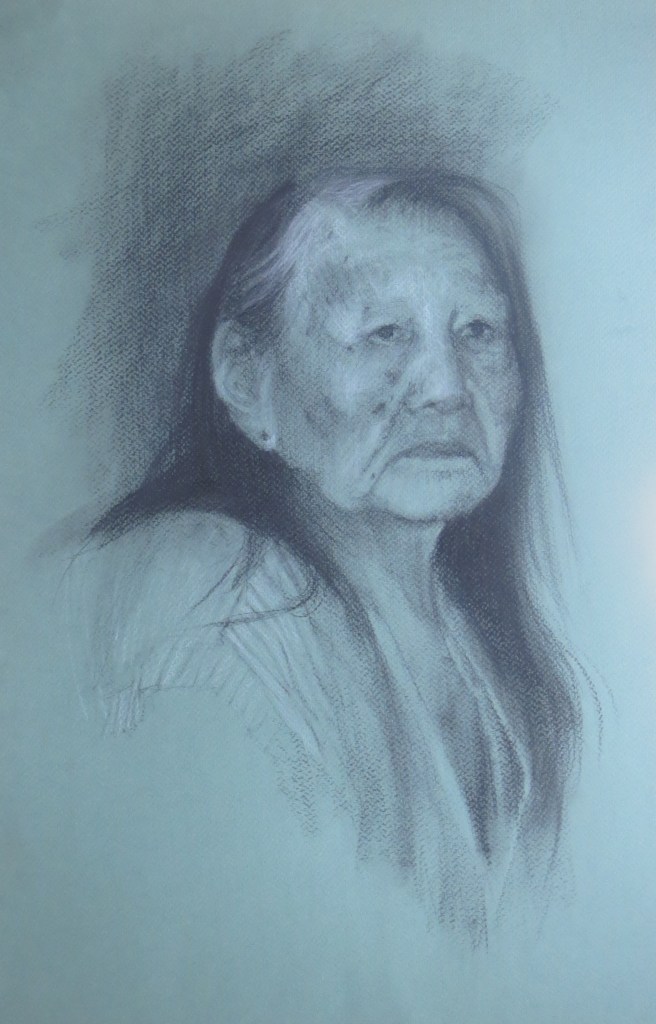
She came into this world on 8, of May, 1919, in Old Fort, Alberta, the eldest of eleven children. With two sisters and eight brothers, she quickly learned the weight and responsibility of caring for others. At just 15, she entered into marriage with Isadore Deranger in 1933 in Fond du Lac. Their union began a life journey marked by both hardship and immense determination.. She became a widow in 1992, after nearly six decades of shared life.
Mama was born into a time when modern comforts were luxuries beyond reach. There was no electricity, no plumbing, no telephones or television. Her world was one of survival and strength. She made do with what was at hand. She always did it knowing it had to be endured.
She was raised in the traditional Dene way. This was in the lands of northern Saskatchewan and Alberta, along the shores of Lake Athabasca. Those lands shaped her. That way of life became the foundation of who she was—and in turn, who we are. Her resilience was not just inherited, it was lived.
Mama’s life was nothing short of extraordinary. She journeyed from bush life to cities. She traveled by dogsled and later flew in jet planes. She used the moccasin telegraph and eventually watched her grandchildren text on smartphones. Few people live to witness such sweeping change, and even fewer adapt with the dignity and curiosity she carried.
Though she longed to attend school, her father refused. In hindsight, that decision protected her from the trauma of Indian Residential Schools. As we now know, these institutions did more than disrupt families—they attempted to erase culture, identity, and language. While the residential school system succeeded in taking much from our people, it did not take our language—not from Mama. She continued to speak it to us,, proudly, and consistently. By doing this, she quietly became a guardian of our Dene tongue. She passed it on to us so that we would remember who we are.
Still, she never stopped valuing learning. Later in life, she enrolled in adult education classes. I remember the pride in her voice when she can showed me what she wrote., her children’s names. Her eyes sparkled. Her smile was sweet. It was one of the happiest moments I ever saw in her.
She was a bride at fifteen, married through traditional custom to a man much older. It was not an easy path. Her life as a wife and mother began early. By the time she was in her forties, she had given birth to nineteen children. She endured long, isolating winters in first in a tent, then a log house built by my dad. Often alone while my father was away trapping and hunting. She birthed most of her children without doctors. She walked miles in snow to reach midwives. She cared for infants with nothing more than her own hands and courage.
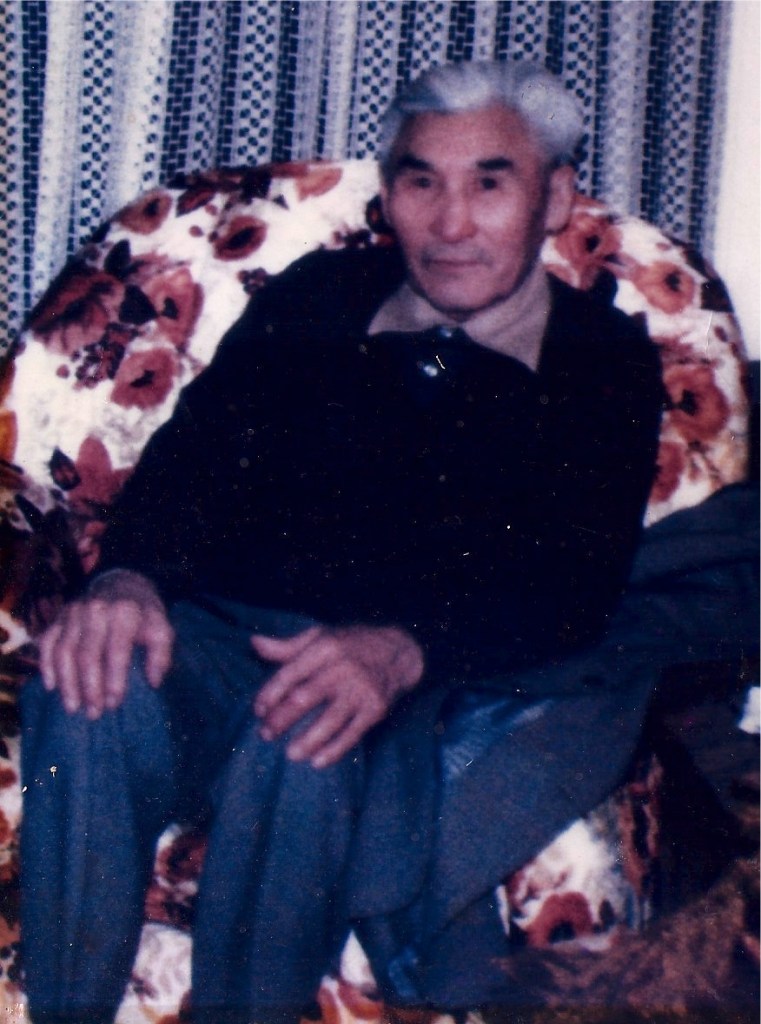
There were no luxuries. No nurses. No modern baby products. Yet somehow, she made it all work—with strength, with endurance, and with love. As her children grew, they became her helpers. Together, they made it through.
Mama knew loss intimately. One of her babies passed away in the cold, stormy night in a fragile tent. Later, she would bury five more of her children, including my brother Billy in December 2012. That Christmas was especially painful. No parent should have to bury a child—and yet, she carried that grief with a quiet, unbreakable spirit.
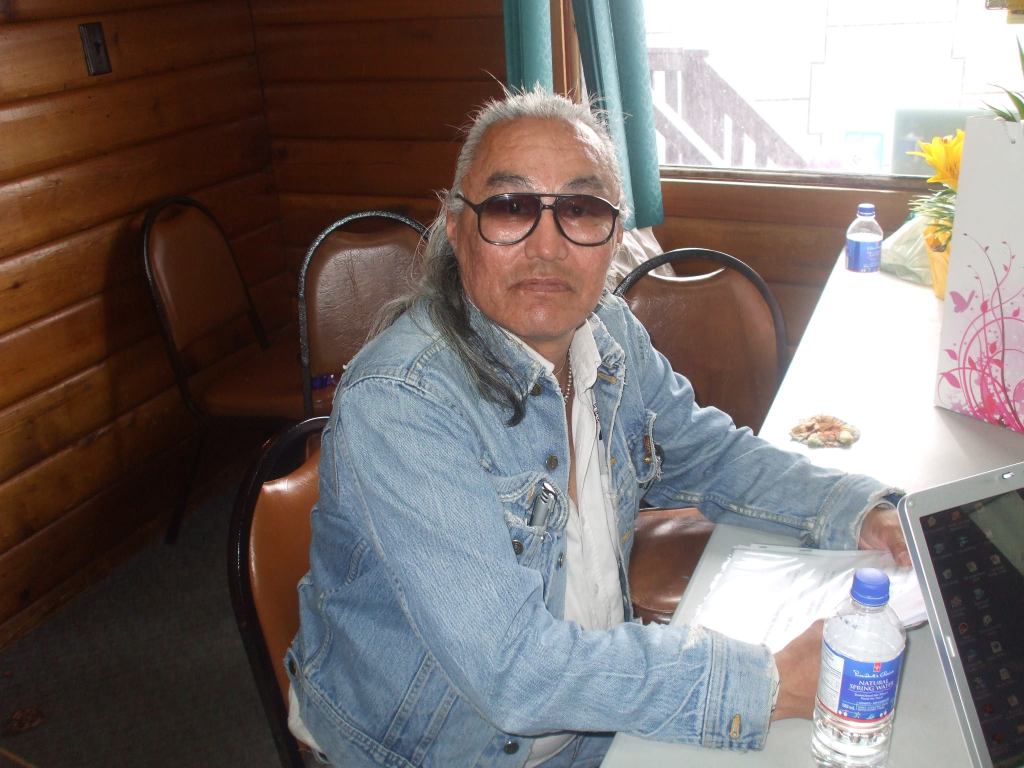
She faced cancer in her thirties, underwent eleven surgeries over the years, and still kept going. I remember as a child, praying with my siblings in her empty bedroom while she lay in the hospital. She later told us about a vision she had of a glowing man at the foot of her bed. She pleaded with him not to take her—she had children who still needed her. And she came back to us. She believed it was God’s will, not for herself, but for her children.
Mama was human, too. There were difficult years in the 60s and 70s—times clouded by alcohol, like so many others of that era. But one day, she simply chose to stop. And she never looked back. She later gave up smoking just as decisively. When she set her mind to something, nothing would stop her. Her will was unwavering.
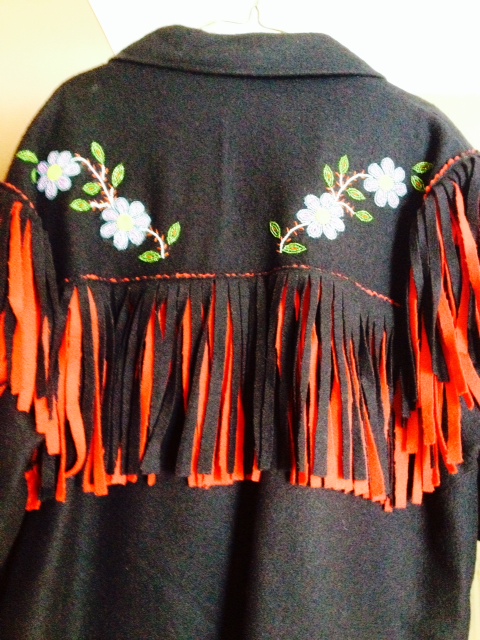
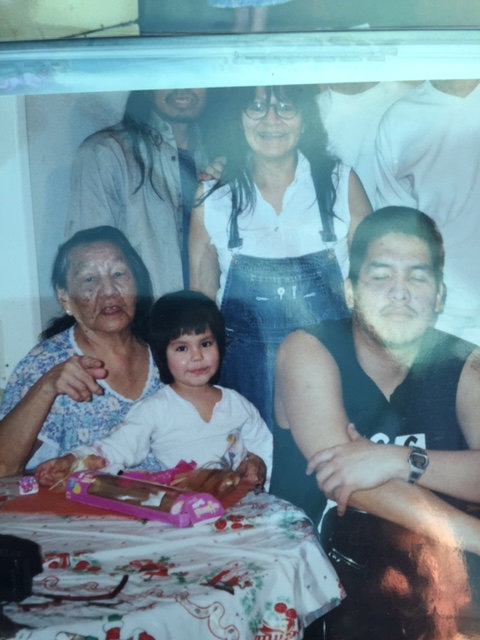
There was so much more to Mama than the hardships she faced. She loved life. She loved to travel, to laugh, to visit with her grandchildren and great-grandchildren—now numbering over a hundred. She found happiness in being busy, in creating beauty with her hands. Her bead work was legendary—meticulous, traditional, and utterly her. Her jackets were admired throughout the region. She taught us all to work with care and take pride in what we create.
She loved the annual Catholic pilgrimage to Lac St. Anne. It was a sacred time for her—a reunion of hearts and a celebration of faith. She brought back holy water, pendants, and blessings to share with others. Giving brought her joy.
Mama was also the heart of the home. Her bannock, her fresh-baked bread, her Christmas bread pudding—these were more than meals. They were love made tangible. We shared laughter over homemade taffy, and warm summer days around the wood stove moved outdoors. On reflection I believed mama had OCD. She had us cleaning often. If she felt it was not done correctly, we would have to redo the cleaning. This made us all good cleaners, even my brothers.
She gave me so much—resilience, love, courage. When I clean to calm myself, I know it’s her spirit working through me. And I never leave dirty dishes overnight in the sink. When I keep going, even when things feel too heavy, I know she’s with me.
A memory from Margo, my sister in law reminds me of Mama’s gentle humor. On a dusty drive to Lac St. Anne, the ladies in the back of the car were covered in dust from the gravel road. They burst out laughing over a misheard place name—”Greengrass” instead of “Grassland.” Their joy was infectious.
Mama was strong. She was proud. She was deeply religious. life wasn’t easy, but it was full. Her legacy isn’t just in her children or her beadwork. It’s in the way she lived. It’s in the strength she gave us. It’s in the language she protected and the love that still surrounds us.
I honor her memory. I admired her. I miss her. And I am forever grateful that she was mine.

 From the Shores of the Ottawa River
Leave a comment