Mama: Matriarch of Strength (1919–2016)
“What I think is that a good life is one hero journey after another. Over and over again, you are called to the realm of adventure, you are called to new horizons. Each time, there is the same problem: do I dare? And then if you do dare, the dangers are there, and the help also, and the fulfillment or the fiasco. There’s always the possibility of fiasco. But there’s also the possibility of bliss.” — Joseph Campbell
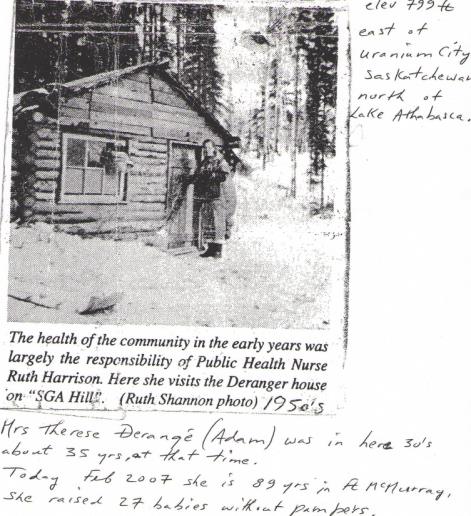
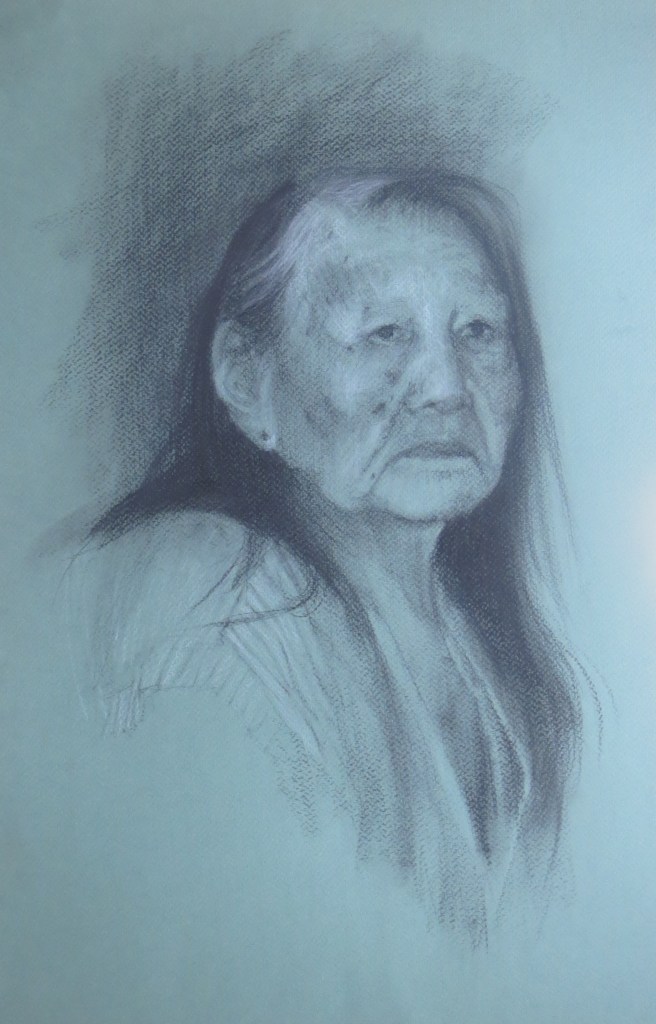
In this chapter, I write about the matriarch of our family, my mother, Therese Deranger (née Adams). She succeeded in keeping our enormous family of sixteen children together. She also cared for nieces and nephews who were raised as siblings. She was our anchor, our teacher, and our source of strength.
Mama was born on May 8, 1919, in Old Fort, Alberta. It was a time and place where survival depended on hard work. Community and a deep connection to the land were also essential. She married young—at only fifteen—and began raising children in a world marked by poverty and resilience. Her life was challenging. Yet, she carried her burdens with grace, humor, and a quiet strength. This shaped every one of us.
She endured much hardship. She raised sixteen children with limited resources. She faced the grief of losing six of them. Later, she survived breast cancer and multiple surgeries. Still, Mama never wavered in her faith or her responsibilities. She believed in perseverance, in doing what needed to be done, and in finding small joys even amid struggle.
Mama was strict. She was even loud and bossy.
My brother Billy once joked as he walked into the house. He said, “Mama, I can hear you all the way at Mah’s cafe.” Her discipline kept the household in order. She balanced authority with creativity.
She was a master at crafting beautiful designs that carried on Dene tradition. Her bead work was more than art. It was a language. Each stitch was a story. Each pattern was a connection to our ancestors.
Though she had her sharp edges, Mama’s care for others was undeniable. She welcomed not only her children into her home but also extended family and visitors. She ensured no one was left without a place. Our house was often chaotic, filled with noise, laughter, and sometimes tears, but it was also filled with love.
Mama was not one for outward displays of affection. It was at least not in the way one can imagine.” In fact, I never viewed my parents’ marriage as romantic. . Their love was practical, steadfast, and lived out in their commitment to raising a family and surviving together. It was, in its own way, a story of endurance and devotion rather than passion.
What stands out most is Mama’s resilience. She can withstand challenges that would have broken others. She did so while raising a generation rooted in both tradition and adaptation. She taught us strength, discipline, and faith, but also laughter and storytelling.
Mama’s journey was one of constant calls to adventure—whether in the form of survival, motherhood, or healing. She faced the dangers, and the joys with the courage of a true heroine. Her legacy is not only in her children and grandchildren. It is also in the values she instilled: perseverance, creativity, generosity, and an unshakable belief in family.
Her story is not one of perfection but of power. And it is a reminder that heroism can be found not just in epic battles or great journeys. It is also in the everyday act of keeping a family together. It is in holding fast to tradition. It is about daring, always, to endure.
In 1945 and 1951, tragedy struck. Over a decade before I was born, my brother Alfred, only fourteen, fell ill. He was sent to the hospital in Fort Smith, NWT. She never saw him again they didn’t return his body to her making her grieve that much harder. Six years later, in 1951, tragedy struck again when my brother Donald drowned in Lake Athabasca.
Mama took this loss very hard. Grief overwhelmed her to the point that she suffered a nervous breakdown after Donald died.
Carrying her sorrow, she gathered the family and moved us to Uranium City, Saskatchewan, to be closer to her parents. It was an act of survival—seeking the comfort of kin, grounding herself in the familiar when life felt unbearable.
For ten years, Uranium City became our home. But in 1961, Mama made the decision to return us to Fort Chipewyan, carrying both her grief and her determination. This journey back was more than a relocation—it was an act of reclamation.
 From the Shores of the Ottawa River
Leave a comment