Chapter: Knowledge Keepers
“The privilege of a lifetime is being who you are.
When you follow your bliss, doors will open where there were none before.”
— Joseph Campbell
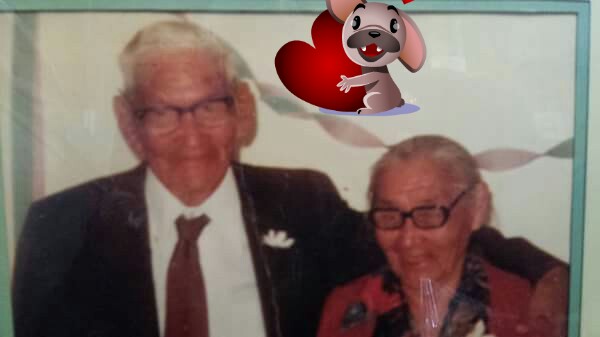
My grandmother, Christine Marie Laddi Adam, was born on January 11, 1902. She was born near Fond du Lac, Saskatchewan, on the trapline of her parents, Pierre Laddi and Sophie Tsaytthore. She was Denesuline, born into a world of caribou migrations, spruce forests, and ancient teachings. She lived to see that world fade and another rise — one shaped by colonizers, mines, and machines.
She married Chrysostome Adam of Fort Chipewyan on July 8, 1918, when she was sixteen. Together they raised eight children, including my mother, Therese Adam, who was born in 1919. Their marriage was one of partnership and endurance, bound by both faith and tradition. They remained together for sixty-seven years until my grandfather’s passing in Uranium City.heir home was more than a shelter; it was a sanctuary. People from Fond du Lac, Black Lake, or Stony Rapids often traveled south for medical care. During these trips, they stayed with my grandparents. They were never turned away. A warm meal, a soft bed, and kind conversation awaited them. It wasn’t charity—it was love expressed through hospitality.
Christine and Chrysostome believed that the land teaches us to share what we have. Just as the caribou sustains the people, so too must the people sustain one another. Around their fire, stories flowed, laughter echoed, and sorrow was eased. They made space for healing, for listening, for remembering.
Christine said that when her husband returned from hunting, she would hear the bells of his dog team. She would recognize them long before he arrived. She would rush outside to greet him, knowing the sound meant he was safe.
In their kindness, I see the embodiment of what Campbell meant by “following one’s bliss.” My grandparents found purpose in giving, in helping, in preserving dignity. Through their actions, they imparted wisdom that is older than any book. It teaches that our humanity is measured by how we treat each other.
Grandma Christine often spoke of how different the world had become. In her youth, a boy began hunting by age twelve. A girl started sewing even younger. She learned to prepare hides, bead caribou skin, and make clothing for her family. “It was our school,” she said. By fourteen, girls were considered adults, ready for marriage, and skilled in the arts of survival.
The Dene beadwork of her generation was unmatched — roses stitched with caribou sinew, each petal radiating patience and pride. Her craftsmanship was exquisite, and her work was sought after throughout the north.
She spoke of the tea dances. These were gatherings lit by open fires. Families brewed tea and danced gently to the drums. These were not like the southern powwows with feathers and spectacle; they were quiet ceremonies of unity, devotion, and balance. No invitations were ever sent — a few gunshots into the sky were enough to summon the nearby camps.
Christine said that when her husband returned from hunting, she would hear the bells of his dog team. She would recognize them long before he arrived. She would rush outside to greet him, knowing the sound meant he was safe.
Their lives were measured by the rhythm of nature. The caribou provided food, hides, and tools; the land offered everything they needed. In those days, women tanned hides using caribou brains and smoke, softening them to a golden hue. Each family had its own smokehouse. It was a low, cone-shaped teepee. Smoldering wood gave the leather its distinctive scent.
They built a life of balance and dignity. Christine once said, “A man had respect for his wife if she worked hard and did not complain. That was love.”heir home was more than a shelter; it was a sanctuary. People from Fond du Lac, Black Lake, or Stony Rapids travelled south for medical care. When they did, they stayed with my grandparents. They were never turned away. A warm meal, a soft bed, and kind conversation awaited them. It wasn’t charity—it was love expressed through hospitality.
Christine and Chrysostome believed that the land teaches us to share what we have. Just as the caribou sustains the people, so too must the people sustain one another. Around their fire, stories flowed, laughter echoed, and sorrow was eased. They made space for healing, for listening, for remembering.
In their kindness, I see the embodiment of what Campbell meant by “following one’s bliss.” My grandparents found purpose in giving, in helping, in preserving dignity. Through their actions, they passed on a wisdom older than any book. Our humanity is measured by how we treat each other.
But she also knew sorrow. She lived long enough to see her people struggle with loss — of land, language, and culture. Alcohol and colonization brought grief to many homes. “In the old days,” she would sigh, “we had no need for drink. The dance, the song, the stories — they were enough.”
Her life stretched across eras — from the days of dog teams to the roar of aircraft over Lake Athabasca. When the uranium mines opened in the 1950s, she and my grandfather witnessed strangers arrive. They cut through the forests where their ancestors once set traps. “This was all jack pine,” she said, “before they built the RCMP barracks.”
Even in her later years, she found joy in small things. She played poker with her friends, laughed easily, and never lost her wit. My grandfather, a gentle man with a quiet humor, loved to tease us children with his cane. He gave each of us a Dene name — gifts of identity we carry still.
He was never loud or harsh. I never heard him raise his voice.
Their story is one of endurance, faith, and devotion to the land. Together, they bridged generations — from the nomadic caribou camps to the industrial north. Their love and strength formed the roots of our family tree.
Footnotes
- Government of Canada. Genealogical Records, Red Series: Pierre Laddi and Sophie Tsaytthore Family Line. Saskatchewan Archives. 1911 Census, Fond du Lac.
- “Christine Adam, Uranium City Elder Recalls Early Life,” Alberta Local News, ca. 1980.
- National Geographic, “Sophie Laddi — A Dene Matriarch of the North,” (feature article, c. 1960).
 From the Shores of the Ottawa River
Leave a comment