Indigenous Identity — A Necessary Reckoning
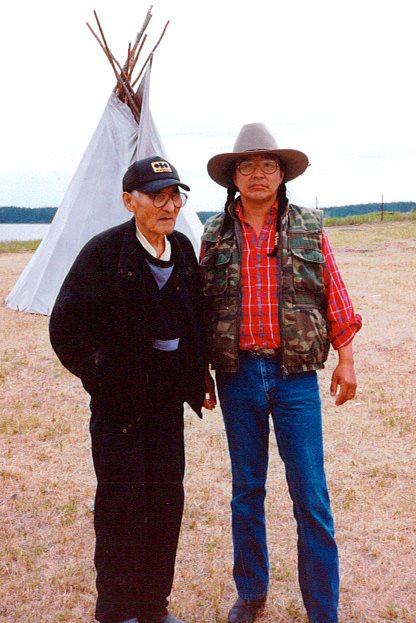
the picture above is my dad and older brother Freddy
Thomas King’s admission that he falsely claimed Cherokee identity forces a hard truth back into the light. And I will say it plainly: Indigenous identity is not an aesthetic. It is not a performance. It is not something you get to declare because it benefits you.
For generations, Indian policy in North America was designed to erase us. To kill the Indian within the child. to shame us for our languages. It outlaw our spiritual practices, disconnected us from family, and push us to forget who we were. Our ancestors were beaten for speaking their mother tongue. Our ceremonies were banned. Children were renamed, numbered, and punished for being Native Indian.
We were told not to be Indian.
And now—
people are pretending to be Indian.
For grants.
For fame.
For book deals.
For movie roles.
For careers built on stolen cultures and borrowed names.
The irony is not only bitter — it is infuriating.
Thomas King “looked the part.”
Buffy Saint-Marie “looked the part.”
Grey Owl “looked the part.”
They performed Indigeneity, and the public rewarded them for it. They were embraced, platformed, awarded. Meanwhile, the actual Nations they claimed — Cherokee Nation, Plains Cree communities, the Métis Nation — spoke out firmly. They repeatedly stated: These individuals do not belong to us.
But institutions didn’t listen.
Publishers didn’t listen.
Governments didn’t listen.
Because the stereotype looked “right.”
That is the violence of pretendianism:
it rewards performance over kinship, appearance over accountability, stereotype over truth.
Indigenous identity is not something you self-appoint.
It is not created through costume, hair, or skin tone.
It is not about blood quantum or romantic claims to a distant ancestor.
Identity comes from:
- Kinship
- Community
- Lived relationship
- The Nation that claims you
You can’t claim a People who do not claim you.
So when Indigenous communities say who belongs and who does not, the world must listen. Indigenous identity belongs to us, not to the public imagination. It certainly does not belong to those who find “being Indian” suddenly useful.
Why Refusing to Apologize Is Ethically and Morally Wrong
The troubling aspect of Thomas King’s refusal to apologize lies in his deception. Additionally, it shows an absolute disregard for the harm he caused. King benefited for decades—financially, professionally, socially—from claiming a Cherokee identity that was never his. He wrote books as an “Indigenous” author. He held positions meant for Indigenous scholars. He won awards intended to uplift Indigenous voices. He built an entire public legacy on a lie.
And when confronted with that truth, he offered nothing.
No apology.
No accountability.
No recognition of the harm.
No humility.
That silence is not neutral—it is an ethical failure.
It tells Indigenous people that their identity can be taken without consequence.
It tells the public that lying about being Indigenous is merely an “inconvenience,” not a form of exploitation.
It tells publishers, institutions, and governments that a celebrated writer is above responsibility.
King’s refusal to apologize compounds the harm. An apology is not just about personal remorse. It is part of restoring what was taken. His false identity took opportunities from real Indigenous writers. It confused and miseducate generations of readers. It contributed to a long history of non-Indigenous people using Indigenous identity for personal gain. Meanwhile, the original Peoples were punished. They were also dispossessed and silenced.
And this is where the moral weight becomes undeniable:
For more than a century, Indian policy in North America was designed to “kill the Indian within.” These policies included residential schools, pass systems, outlawed ceremonies, and forced relocation. The aim was to shame us out of being who we are. And now, in a cruel twist, non-Indigenous people slip into our identities because it benefits them.
To take an identity your ancestors were never punished or beaten for is not a small matter. They were never denied education, land, or dignity. Refusing to apologize when the truth comes out adds to the issue. It is an insult layered on generations of suffering.
An apology can’t undo the past.
But refusing one sends a clear message:
He believes he owes Indigenous people nothing.
And that is the deepest moral failure of all.
 From the Shores of the Ottawa River
Leave a comment