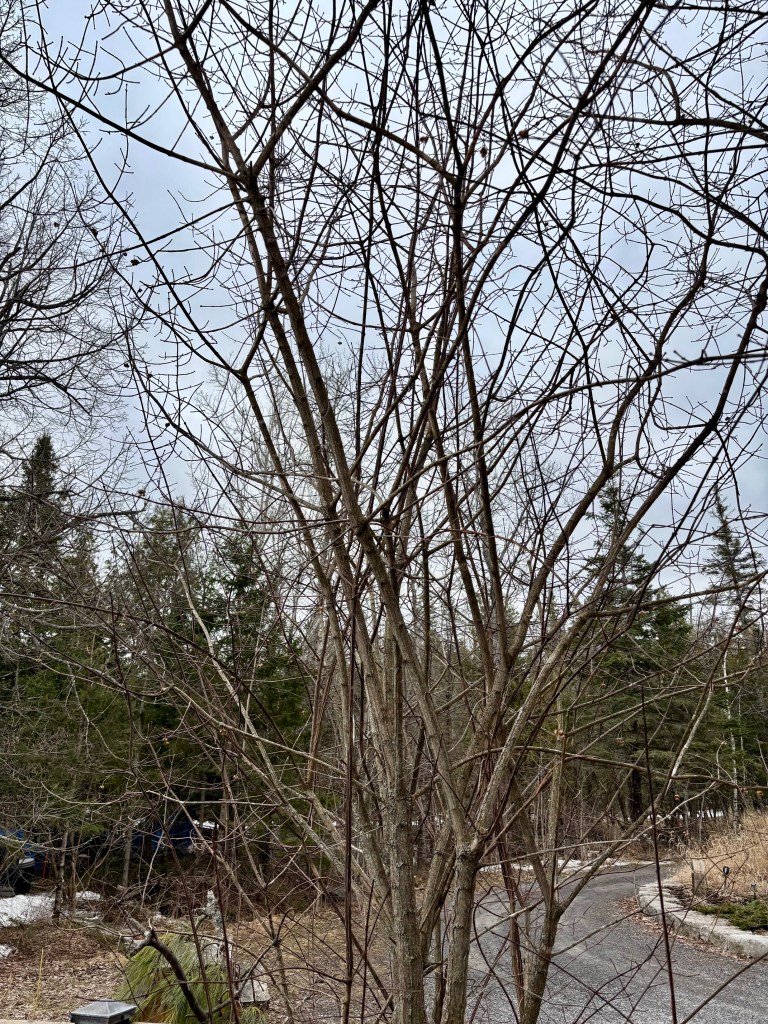
Trees and humans share remarkable similarities despite their differences in form. Like humans, trees have unique life cycles, growing from small beginnings into strong, mature beings. Their roots anchor them to the earth, much like human foundations—our families, cultures, and experiences—that shape who we become.Recently I’ve read several books on trees, I speak for Trees, Our Green Heart, and Hidden life of Trees. The more I learn of trees, I’ve become more enamored of the trees in my yard.
Beyond physical growth, trees and humans also communicate in unexpected ways. Trees use scents to send messages, much like humans do with pheromones, perfumes, and natural body odors. Scientists believe pheromones influence human attraction and relationships, creating a silent language of scent. Trees, too, have this ability. On the African savanna, giraffes feeding on umbrella thorn acacias triggered a fascinating response. The trees began pumping toxins into their leaves as a defense. But even more astonishingly, they released ethylene gas to warn neighboring trees of the impending danger. In response, the forewarned trees also fortified themselves, forcing the giraffes to move further away in search of unprepared foliage.
This silent communication extends beyond defense. Trees emit fragrances to attract pollinators, much like humans use visual and olfactory cues to draw attention. Blossoms release their scents purposefully, signaling bees to collect nectar in exchange for pollen transport. Even beneath the soil, trees exchange information through electrical signals. These signals travel via root-tip cells. This is akin to the way our nervous system transmits messages.
However, not all trees can “speak.” Those disconnected from their fungal networks or suffering from illness stay silent, unaware of approaching threats. Similarly, humans who are isolated or out of touch with their communities can struggle to navigate challenges.
Modern agriculture has disrupted this natural form of communication. Selective breeding has muted the voices of cultivated crops, making them vulnerable to pests and necessitating heavy pesticide use. In contrast, forests thrive because of their interconnectedness, offering lessons in resilience and cooperation.
Recent studies suggest trees even respond to sound. Researchers found that seedlings exposed to a frequency of 220 Hz moved their roots toward the source. This indicates they were “listening.” If trees can hear, we are only beginning to uncover the depth of their awareness. The next time you walk through a forest and hear a soft crackling, it is not just the wind. It is the whispering language of trees. Stop and listen.


Leave a Reply